

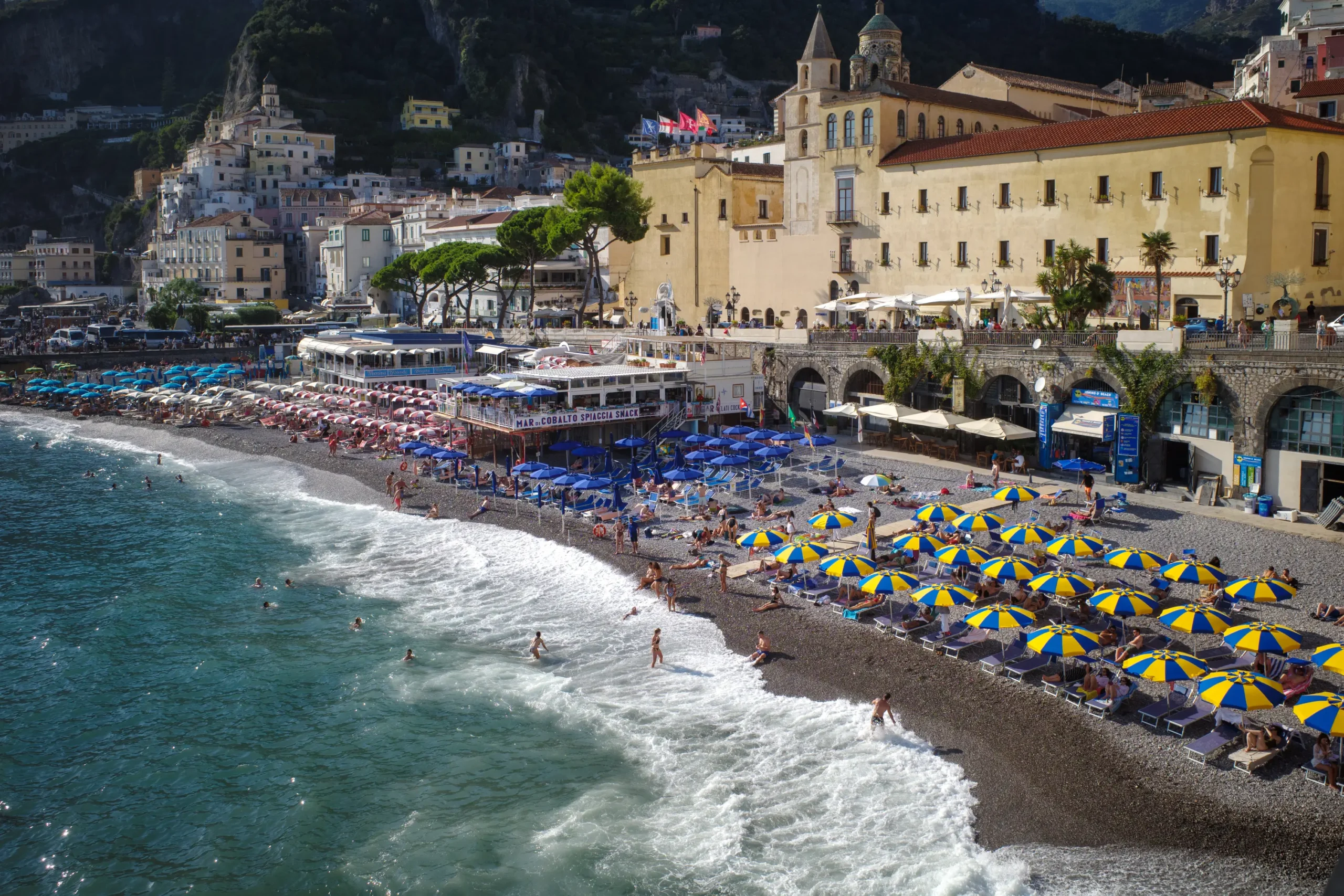
Perched atop dramatic cliffs that plunge into the azure waters of the Tyrrhenian Sea, the Amalfi Coast stands as one of Italy’s most captivating destinations. With its elegant celebrity villas, charming villages, lemon groves, and terraced vineyards, this coastline has been a magnet for travellers since the days of the Roman Empire. Whether you’re in the mood to explore hiking trails, take a refreshing dip in the sea, or indulge in shopping and sunsets, the Amalfi Coast offers something for every traveller.


What and Where is the Amalfi Coast?
The Amalfi Coast, a UNESCO World Heritage site, is located in the Campania region of Southern Italy, approximately 60 km south of Naples and 20 km from Sorrento. Stretching about 50 km, this scenic coastal strip comprises 13 towns, all connected by the winding SS163 highway, renowned as one of Europe’s most beautiful driving routes.
From the glamorous Positano in the west to the more serene Vietri sul Mare in the east, the Amalfi Coast’s seaside towns form a ribbon along the coastline, with picturesque villages such as Praiano, Amalfi, Minori, and Maiori nestled between. High in the hills, the likes of Ravello and Furore offer stunning panoramic views.
How Long Should You Spend on the Amalfi Coast?
While the Amalfi Coast can be enjoyed as a day trip, ideally, you’ll want to spend at least two to three days exploring its towns. In a single day, you can visit Positano and Amalfi, taking the iconic boat ride between them for breathtaking views of the coastline. But for a fuller experience, an overnight stay is recommended, giving you time to stroll through the winding streets, soak in the sunsets, and explore lesser-known spots.
If you have four or more days, consider splitting your time between a few different towns, adding day trips to Sorrento, Capri, or Pompeii for a broader exploration of the region.


When’s the Best Time to Visit?
The Amalfi Coast enjoys a Mediterranean climate with hot, dry summers and mild winters. Peak tourist season falls in July and August, when temperatures soar to 29ºC (84ºF), and the area bustles with visitors. For a more relaxed experience, visit in spring (May–June) or autumn (September–October), when the weather is still warm, ranging from 22–26ºC (68–79ºF), but the crowds are thinner.
From November to March, the coast winds down, with ferries and many hotels closing. While it’s still pleasant during the day (12ºC/54ºF), rainfall is more frequent, particularly in November and December.
Where to Stay on the Amalfi Coast?
Accommodation on the Amalfi Coast varies widely, from luxurious hotels and villas to more affordable guest houses and Airbnb rentals. The best choice depends on your travel style and how you plan to get around.
For those looking for lively nightlife, Positano is a glamorous choice, offering high-end dining and beach clubs. Amalfi, the largest town, provides great transport links and a bustling atmosphere. Ravello, perched in the hills, is perfect for a quieter retreat with stunning views across the bays.
Alternatively, towns like Maiori, with its long sandy beach, or the lesser-known Vietri sul Mare and Praiano, offer more laid-back options with fewer tourists.


Things to Do on the Amalfi Coast
The Amalfi Coast’s charm lies in its natural beauty, but there are several must-see landmarks along the way. Visit the stunning Amalfi Cathedral, the gardens of Villa Rufolo in Ravello, and the mysterious Emerald Grotto near Conca dei Marini. Wander through the quaint streets, visit local vineyards, and explore ancient ruins such as the Roman villa in Minori.
For hiking enthusiasts, the “Path of the Gods” is a rewarding 7.8 km route along the cliffs offering panoramic views, while the “Path of the Lemons” takes you through fragrant lemon groves between Maiori and Minori.
Amalfi Coast Beaches
The coastline is dotted with small, pebbly beaches tucked into rocky coves. Many beaches are privately run, offering sunbeds, umbrellas, and refreshments for hire. Positano’s Marina Grande beach is a popular choice, but for a quieter day, head to Maiori, which boasts the longest sandy beach on the coast. Furore Fjord is another gem, with its dramatic gorge and crystal-clear waters.
Getting to the Amalfi Coast
The closest airport is Naples Capodichino, 60 km away. From there, you can rent a car, take a private transfer, or use public transport. Ferries and buses connect Naples to the Amalfi Coast, with stops in Positano, Amalfi, and other towns. Sorrento and Salerno also serve as excellent gateways to the region, with more frequent transport options.
Driving along the SS163 offers stunning views, but the narrow, winding roads can be challenging, especially in peak season. Parking is limited and pricey. Alternatively, SITA buses connect the towns, but these can get crowded. Ferries provide a scenic way to travel, particularly between Positano, Amalfi, and Sorrento, operating mainly from April to October.
