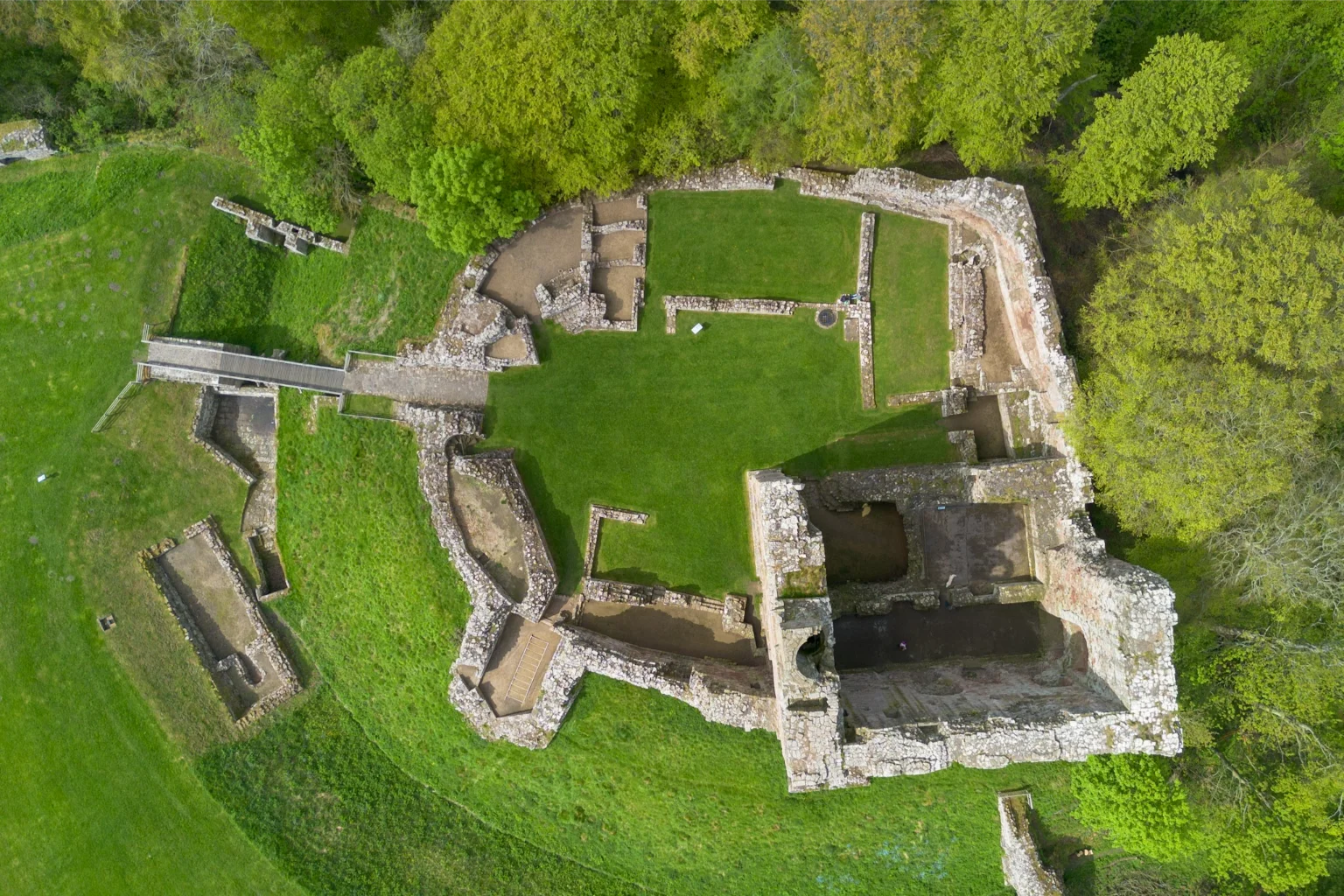
Norham stands out as one of the most striking landmarks in the border country, perched atop a lush green mound and overseeing a crucial crossing of the River Tweed. This fortress was a key player in the once restless area, noted for its strategic significance.
It bore the brunt of Scottish aggression more than any other, enduring sieges at least 13 times, including a protracted one by Robert Bruce that lasted nearly a year. Despite its formidable 12th-century keep and the stout walls of its towered bailey, Norham couldn’t withstand the devastating force of James IV’s artillery and succumbed to him in 1513, just before his own downfall at Flodden Field.
The borderlands were notorious for their wild and lawless nature, often becoming hotbeds for conflict. Norham Castle stood as a beacon of defence, especially during wars, guarding the Tweed fords which were a favoured route for invaders into England. Along with its sister castles in Berwick and Wark, Norham was a crucial part of the region’s protective barrier.
THE 16TH CENTURY RENOVATIONS
Ranulph Flambard, the Bishop of Durham from the end of the 11th century to the early 12th, didn’t just serve in a religious capacity; he was also a visionary who laid the foundations for Norham. Back in those days, bishops in Durham weren’t just spiritual leaders; they were powerful figures, entrusted with keeping peace on the chaotic English-Scottish border—a role they took on in exchange for near-royal powers.
Highlighting Norham’s importance, when Henry II saw the need for a stronger fortress, he turned to Hugh du Puiset, who had become Bishop of Durham in the mid-12th century. Under Bishop Puiset’s orders, the castle underwent significant renovations, including the construction of a grand tower that offered both defence and dignified quarters—reimagining Flambard’s original hall.
Following the turbulent years, a significant transformation took place in the 16th century as the fortress was extensively rebuilt to accommodate the era’s new warfare technology—artillery. These modifications have stood the test of time, and their imprints on the structure are still distinctly visible today, offering a fascinating glimpse into the past and the adaptive strategies of historical fortification techniques.


THE PEACE TREATY
Further enhancements were made under King John in the early 13th century, signifying the castle’s vital role in border defence. Its resilience was put to the test in 1215 when Alexander II of Scotland laid siege to it for 40 days, only to be repelled. This event underscored Norham’s formidable presence. The signing of a peace treaty at Norham in 1219 marked the beginning of a relatively peaceful era along the border, showcasing the castle’s significance not just as a military fortress but as a symbol of authority and stability in turbulent times.